
Table of Contents
316 Stainless Steel Jewelry: Is It Safe, Durable, and Worth Buying?
Why Buyers Ask About 316 Stainless Steel Jewelry?
When buyers ask us about 316 stainless steel jewelry, they rarely ask about style.They ask practical questions.
Can it be worn every day?
Will it cause skin problems?
And will it still look the same after months of use?
We manufacture stainless steel jewelry every day.
Our answers come from production, plating, and wear testing—not theory.
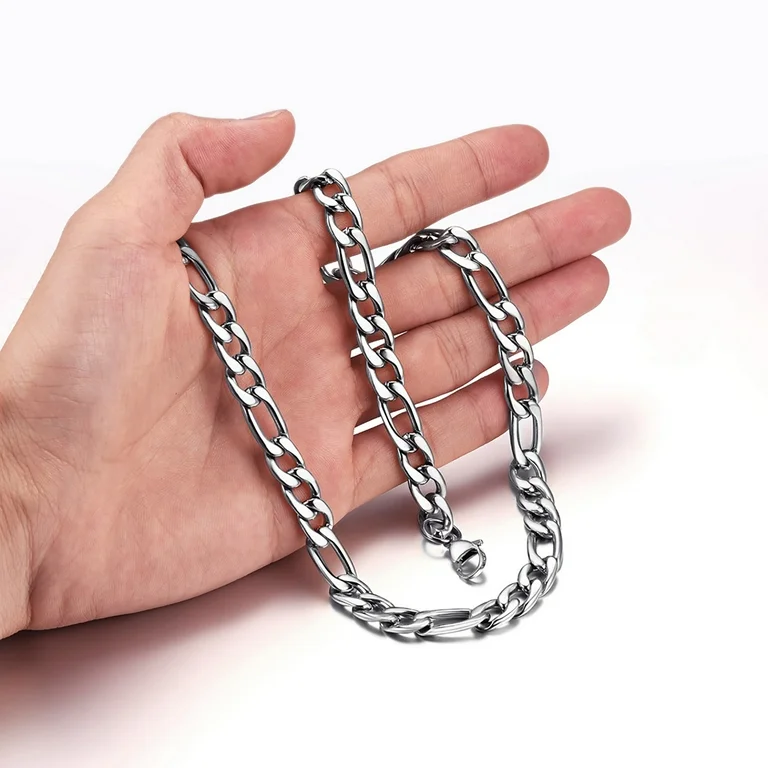
Is 316 Stainless Steel Jewelry Safe for Skin?
In manufacturing, skin complaints usually have clear causes.
Low-grade metal.
Unstable surface treatment.
That is why we use 316L stainless steel for jewelry that touches skin directly. It releases far less nickel than lower grades. This matters for buyers with sensitive skin or an existing skin condition.
We see it clearly in feedback. Customers who react to plated fashion jewelry often stop experiencing irritation after switching to 316L. Not because the design changes, but because the material does.
This is also why professional markets describe it as hypoallergenic stainless steel jewelry. The label is not marketing. It reflects how the material behaves in real use.
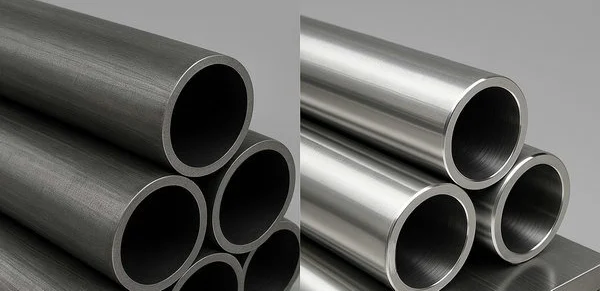
Does Stainless Steel Jewelry Rust in Real Life?
Rust is not a theoretical concern. It shows up during use.
Sweat, humidity, and daily air exposure reveal weaknesses quickly. 316 stainless steel jewelry handles this far better than 304 stainless steel jewelry.
From a factory perspective, that means fewer surface failures. From a buyer’s side, it means stainless steel jewelry rust resistant enough for daily wear without special care.
That is why many buyers see stainless steel as a low maintenance jewelry metal, especially for long-term use.
Durability: What Actually Happens After Months of Wear?
Durability is not about hardness alone. It is about surface stability.
Rings, bracelets, and necklaces move constantly. They rub against skin, fabric, and other objects. 316 stainless steel jewelry durability holds up well under this kind of stress.
For buyers choosing everyday wear stainless steel jewelry, this reduces replacements and returns. That matters more than appearance on day one.
Why PVD Plating Changes the Result?
Material choice is only half the story.
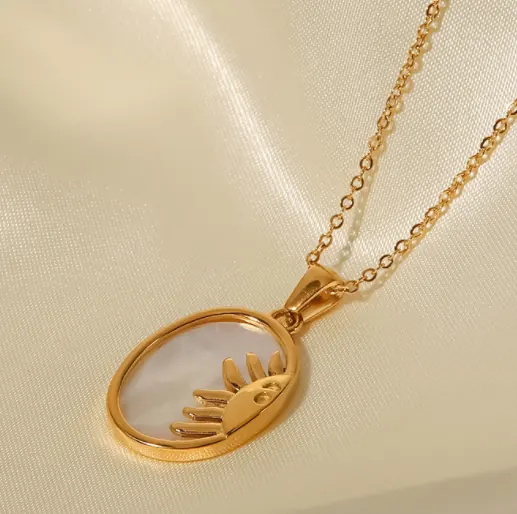
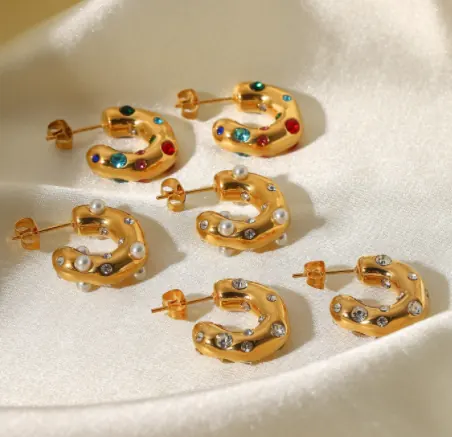
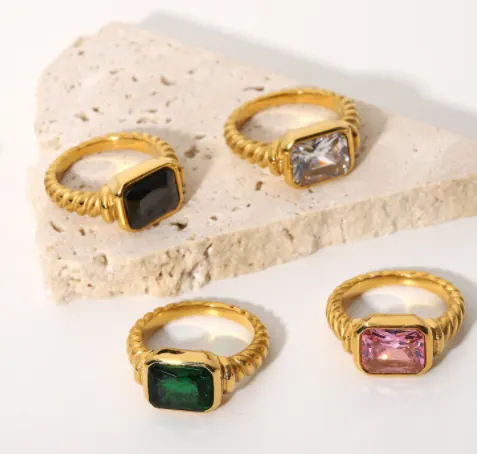
Surface treatment determines how long jewelry keeps its finish. In our own plating facility, we use PVD electroplating rather than traditional methods.
PVD bonds more tightly with stainless steel. Colors stay stable longer. Fading happens slower.
For buyers, this means the jewelry still looks right months later. For brands, it means fewer complaints after delivery.
316 Stainless Steel vs 304 Stainless Steel Jewelry
Buyers often ask if the difference really matters.
It depends on use.
304 stainless steel works for decorative pieces. 316L stainless steel jewelry is chosen when skin contact and moisture exposure are involved. From a manufacturing view, 316 is selected when performance matters more than small cost savings.
That is the real difference.
| Stainless Steel Category | Advantages | Disadvantages |
|---|---|---|
| 304 Stainless Steel Jewelry | ● Containing 9% nickel element, strong corrosion resistance ● Polished, can show a certain degree of luster ● Vacuum plating in the furnace, color retention up to 1-2 years ● Not easy to bend or deform, more durable ● High hardness, no visible scratches ● Hypoallergenic ● Good oxidation resistance, not easy to rust | ● Increased sensitivity to corrosion in chloride or salt environments (e.g., seawater) |
| 316L Stainless Steel Jewelry | ● 12% nickel elements, will add molybdenum elements, corrosion, and rust resistance performance is better ● Higher gloss ● Vacuum plating in the furnace, color retention of up to 1-2 years ● Not easy to bend or deform, more durable ● High hardness, no visible scratches ● “Marine grade” stainless steel, which can be worn in environments with high chloride content (e.g. salt water) or harsh chemicals ● Hypoallergenic ● High resistance to oxidation, not easy to rust | ● More expensive than 304 ● Contains more chemical elements |
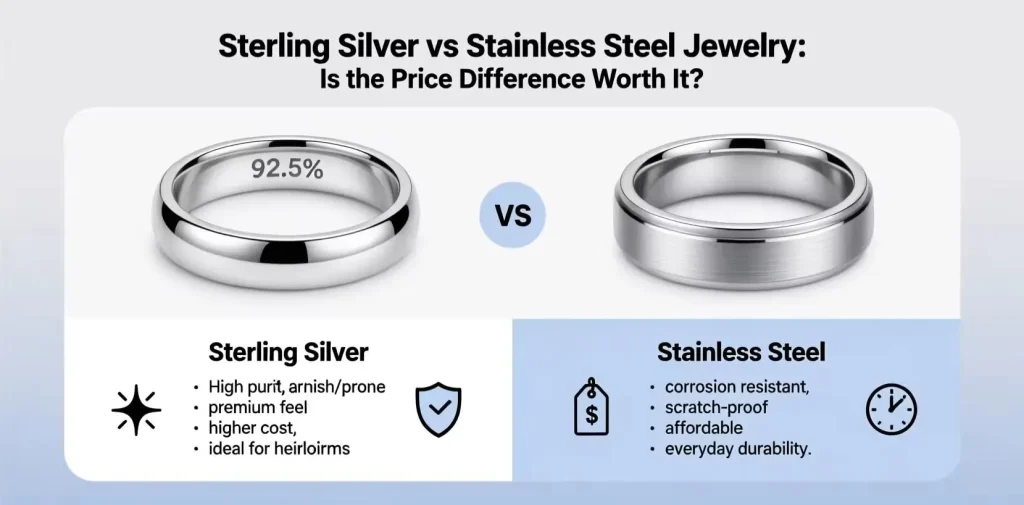
Stainless Steel Jewelry vs Silver : A Practical Decision Silver has value, but it also needs care.
Tarnishing is normal. Polishing is routine. Many buyers accept that. Others do not.
When comparing stainless steel jewelry vs silver, convenience often decides. Stainless steel keeps its look with minimal effort. For daily wear, that simplicity matters.
Is 316 Stainless Steel Jewelry Worth Buying?
From production and long-term wear results, the answer is clear.
When comparing stainless steel jewelry vs silver, convenience often decides. Stainless steel keeps its look with minimal effort. For daily wear, that simplicity matters.
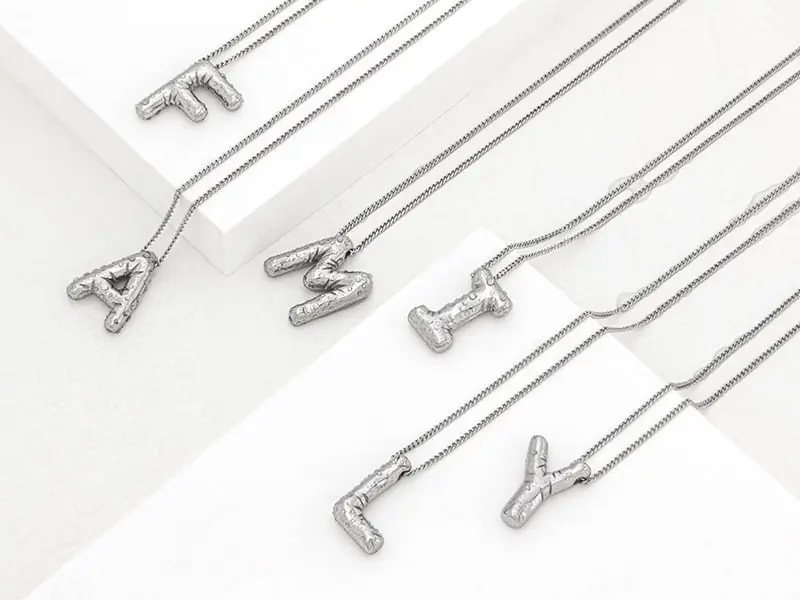
Is 316 stainless steel jewelry safe?
-Yes, especially for sensitive skin.
From production and long-term wear results, the answer is clear.
Is it worth buying 316 stainless steel jewelry?
For buyers who want stability and low maintenance, it makes sense.
This is why many brands and wholesalers choose 316L stainless steel jewelry.
Not because it is fashionable—but because it performs.
FAQ
-
Is 316 stainless steel jewelry safe for sensitive skin?
Yes. 316L stainless steel releases much less nickel than lower-grade metals. Many people with sensitive skin can wear it comfortably for long periods.
-
Is 316 stainless steel jewelry truly hypoallergenic?
316L stainless steel is widely considered hypoallergenic due to its stable composition and low nickel release. While no metal is completely risk-free, it is one of the safest options for direct skin contact.
-
Does 316 stainless steel jewelry rust over time?
316 stainless steel has strong corrosion resistance. It performs well under daily exposure to sweat, humidity, and air, especially compared with 304 stainless steel.
-
What is the difference between 316 and 304 stainless steel jewelry?
304 stainless steel is suitable for decorative or light-use jewelry. 316L stainless steel is preferred for skin-contact pieces and moisture exposure because of better durability and corrosion resistance.
-
How durable is 316 stainless steel jewelry for everyday wear?
316 stainless steel jewelry handles daily movement and friction well. It shows fewer surface issues and lasts longer than typical fashion jewelry made from plated base metals.
-
Is 316 stainless steel jewelry worth buying compared to silver?
For buyers who want low maintenance and consistent appearance, yes. Stainless steel does not tarnish easily and requires far less care than silver.
316 Stainless Steel Jewelry: Is It Safe, Durable, and Worth Buying?
Why Buyers Ask About 316 Stainless Steel Jewelry?
When buyers ask us about 316 stainless steel jewelry, they rarely ask about style.They ask practical questions.
Can it be worn every day?
Will it cause skin problems?
And will it still look the same after months of use?
We manufacture stainless steel jewelry every day.Our answers come from production, plating, and wear testing—not theory.
Is 316 Stainless Steel Jewelry Safe for Skin?
In manufacturing, skin complaints usually have clear causes.
Low-grade metal.
Unstable surface treatment.
That is why we use 316L stainless steel for jewelry that touches skin directly. It releases far less nickel than lower grades. This matters for buyers with sensitive skin or an existing skin condition.
We see it clearly in feedback. Customers who react to plated fashion jewelry often stop experiencing irritation after switching to 316L. Not because the design changes, but because the material does.
This is also why professional markets describe it as hypoallergenic stainless steel jewelry. The label is not marketing. It reflects how the material behaves in real use.
Does Stainless Steel Jewelry Rust in Real Life?
Rust is not a theoretical concern. It shows up during use.
Sweat, humidity, and daily air exposure reveal weaknesses quickly. 316 stainless steel jewelry handles this far better than 304 stainless steel jewelry.
From a factory perspective, that means fewer surface failures. From a buyer’s side, it means stainless steel jewelry rust resistant enough for daily wear without special care.
That is why many buyers see stainless steel as a low maintenance jewelry metal, especially for long-term use.
Durability: What Actually Happens After Months of Wear?
Durability is not about hardness alone. It is about surface stability.
Rings, bracelets, and necklaces move constantly. They rub against skin, fabric, and other objects. 316 stainless steel jewelry durability holds up well under this kind of stress.
For buyers choosing everyday wear stainless steel jewelry, this reduces replacements and returns. That matters more than appearance on day one.
Why PVD Plating Changes the Result?
Material choice is only half the story.
Surface treatment determines how long jewelry keeps its finish. In our own plating facility, we use PVD electroplating rather than traditional methods.
PVD bonds more tightly with stainless steel. Colors stay stable longer. Fading happens slower.
For buyers, this means the jewelry still looks right months later. For brands, it means fewer complaints after delivery.
316 Stainless Steel vs 304 Stainless Steel Jewelry
Buyers often ask if the difference really matters.
It depends on use.
304 stainless steel works for decorative pieces. 316L stainless steel jewelry is chosen when skin contact and moisture exposure are involved. From a manufacturing view, 316 is selected when performance matters more than small cost savings.
That is the real difference.
| 304 Stainless Steel Jewelry |
| ● Containing 9% nickel element, strong corrosion resistance ● Polished, can show a certain degree of luster ● Vacuum plating in the furnace, color retention up to 1-2 years ● Not easy to bend or deform, more durable ● High hardness, no visible scratches ● Hypoallergenic ● Good oxidation resistance, not easy to rust |
| 316L Stainless Steel Jewelry |
| ● 12% nickel elements, will add molybdenum elements, corrosion, and rust resistance performance is better ● Higher gloss ● Vacuum plating in the furnace, color retention of up to 1-2 years ● Not easy to bend or deform, more durable ● High hardness, no visible scratches ● “Marine grade” stainless steel, which can be worn in environments with high chloride content (e.g. salt water) or harsh chemicals ● Hypoallergenic ● High resistance to oxidation, not easy to rust |
Stainless Steel Jewelry vs Silver : A Practical Decision Silver has value, but it also needs care.
Tarnishing is normal. Polishing is routine. Many buyers accept that. Others do not.
When comparing stainless steel jewelry vs silver, convenience often decides. Stainless steel keeps its look with minimal effort. For daily wear, that simplicity matters.
Is 316 Stainless Steel Jewelry Worth Buying?
From production and long-term wear results, the answer is clear.
When comparing stainless steel jewelry vs silver, convenience often decides. Stainless steel keeps its look with minimal effort. For daily wear, that simplicity matters.
Is 316 stainless steel jewelry safe?
-Yes, especially for sensitive skin.
From production and long-term wear results, the answer is clear.
Is it worth buying 316 stainless steel jewelry?
For buyers who want stability and low maintenance, it makes sense.
This is why many brands and wholesalers choose 316L stainless steel jewelry.
Not because it is fashionable—but because it performs.
FAQ
Is 316 stainless steel jewelry safe for sensitive skin?
Yes. 316L stainless steel releases much less nickel than lower-grade metals. Many people with sensitive skin can wear it comfortably for long periods.
Is 316 stainless steel jewelry truly hypoallergenic?
316L stainless steel is widely considered hypoallergenic due to its stable composition and low nickel release. While no metal is completely risk-free, it is one of the safest options for direct skin contact.
Does 316 stainless steel jewelry rust over time?
316 stainless steel has strong corrosion resistance. It performs well under daily exposure to sweat, humidity, and air, especially compared with 304 stainless steel.
What is the difference between 316 and 304 stainless steel jewelry?
304 stainless steel is suitable for decorative or light-use jewelry. 316L stainless steel is preferred for skin-contact pieces and moisture exposure because of better durability and corrosion resistance.
How durable is 316 stainless steel jewelry for everyday wear?
316 stainless steel jewelry handles daily movement and friction well. It shows fewer surface issues and lasts longer than typical fashion jewelry made from plated base metals.
Is 316 stainless steel jewelry worth buying compared to silver?
For buyers who want low maintenance and consistent appearance, yes. Stainless steel does not tarnish easily and requires far less care than silver.